German chocolate cheesecake is what I make when I want deep chocolate richness and a showy topping without turning it into a fussy project. You get a crisp chocolate cookie crust, a silky cocoa-and-melted-chocolate filling, and that classic coconut-pecan crown that sets up into a soft, chewy layer.
If you’re in the mood for another chocolate treat on a different day, I also love keeping something like no-oven chocolate mochi in the rotation—it scratches the chocolate itch with a totally different (bouncy!) texture.
Why You’ll Love This Recipe
- The filling is extra chocolatey from both melted baking chocolate and a hit of cocoa powder, so it tastes dark, round, and not one-note.
- A chocolate wafer/Oreo crumb crust bakes up crisp and cookie-forward, giving the creamy center a clean snap at the base.
- The coconut-pecan topping is cooked until thick and glossy, so it spreads easily and sets into that classic German chocolate “chew.”
- The water bath helps the cheesecake bake gently, keeping the center creamy instead of dry or grainy.
- It’s a great make-ahead dessert: chilling overnight improves the slice and deepens the chocolate flavor.
The Story Behind This Recipe
I built this version to hit the exact contrast I want from “German chocolate” desserts: a smooth, chocolate-forward cheesecake that isn’t overly sweet, topped with a buttery coconut-pecan layer that tastes like caramelized vanilla and toasted nuts.
What It Tastes Like
It’s rich but balanced—cool, tangy cream cheese and sour cream against bittersweet chocolate, with a light vanilla perfume. The topping brings sweetness and texture: soft coconut strands, crunchy pecans, and a custardy, buttery base that makes every bite feel layered (especially when you get a little crust in there too). If you enjoy chewy chocolate textures, you’d probably also appreciate the bite in this chocolate mochi dessert—different vibe, same chocolate satisfaction.
Ingredients You’ll Need
A few details make the biggest difference here: fully softened cream cheese for a lump-free batter, room-temp sour cream and eggs so the filling stays smooth, and melted chocolate that’s cooled slightly so it blends in without seizing. For the crust, removing Oreo filling keeps it crisp and chocolatey rather than overly sweet and greasy.
- 2 cups chocolate wafer cookies or Oreo crumbs (about 24 cookies, filling removed)
- 6 tablespoons unsalted butter, melted
- 3 tablespoons granulated sugar
- Pinch of salt
- 4 packages (8 oz each) cream cheese, softened
- 1 cup granulated sugar
- 1 cup sour cream, room temperature
- 1 teaspoon pure vanilla extract
- 4 large eggs, room temperature
- 8 ounces semi-sweet or German’s sweet baking chocolate, melted and cooled slightly
- 2 tablespoons unsweetened cocoa powder
- ¼ cup heavy cream
- 1 cup evaporated milk
- 1 cup granulated sugar
- 3 large egg yolks, lightly beaten
- ½ cup unsalted butter
- 1 teaspoon vanilla extract
- 1½ cups sweetened shredded coconut
- 1 cup chopped pecans (toasted recommended)
- Drizzle of melted chocolate
- Whipped cream
- Toasted coconut flakes
- Whole pecan halves
How to Make German Chocolate Cheesecake
- Heat the oven and prep the pan. Preheat to 325°F (163°C). Lightly assemble a 9-inch springform pan so the base is snug and ready.
- Make and bake the crust. Pulse the chocolate wafer cookies (or de-filled Oreos) into fine crumbs. Mix with melted butter, 3 tablespoons sugar, and a pinch of salt until the crumbs look evenly moistened like damp sand. Press firmly into the bottom of the pan. Bake for 10 minutes, then set aside to cool.
- Mix the cheesecake base until smooth. Beat softened cream cheese until completely smooth—no visible lumps. Add 1 cup sugar, sour cream, and 1 teaspoon vanilla; mix until creamy and uniform.
- Add eggs gently. Add eggs one at a time, mixing just until each disappears into the batter. (Overmixing here can whip in air, which can lead to cracks later.)
- Turn it into chocolate cheesecake. Stir in melted (slightly cooled) chocolate, cocoa powder, and heavy cream. The batter should look glossy, thick, and evenly brown with no streaks. Pour over the cooled crust and smooth the top.
- Bake in a water bath. Wrap the outside of the springform pan in aluminum foil. Set it in a larger roasting pan, then pour hot water into the roasting pan to create a water bath. Bake 60–70 minutes, until the edges look set and the center still has a small, gentle jiggle (not sloshy).
- Cool slowly, then chill. Turn off the oven and let the cheesecake cool inside for 1 hour. Then refrigerate for at least 6 hours (overnight is even better) until fully cold and sliceable.
- Cook the coconut-pecan topping. In a saucepan, whisk evaporated milk, 1 cup sugar, and the lightly beaten egg yolks. Add butter and cook until thickened—look for a mixture that coats the back of a spoon and leaves a line when you drag a spatula through it. Stir in 1 teaspoon vanilla, shredded coconut, and chopped pecans. Let cool to a spreadable consistency.
- Finish and decorate. Spread the topping over the chilled cheesecake. Drizzle with melted chocolate, then finish with whipped cream, toasted coconut flakes, and whole pecan halves if you like.
Tips for Best Results
- Truly soften the cream cheese. If it’s even a little cool, you’ll fight tiny lumps forever—and they’re extra noticeable in a dark chocolate filling.
- Cool the melted chocolate slightly. Warm chocolate can tighten the batter or create streaks; slightly cooled chocolate blends in smoothly and keeps the texture silky.
- Use the “edge set, center wiggle” test. You want the middle to wobble like soft set gelatin; a fully firm center in the oven usually means it’ll be overbaked once chilled.
- Let the topping cool before spreading. Hot topping can look greasy and can tug at the cheesecake surface; cooled topping spreads in a thick, even layer.
- For the cleanest slices, chill overnight. The crumb crust and chocolate filling both firm up, making the layers sharp and tidy. For another make-ahead chocolate dessert with a totally different texture, try this no-bake chocolate mochi on a weeknight.
Variations and Substitutions
- Crust choice: Chocolate wafer cookies or de-filled Oreo crumbs both work; wafers give a slightly darker, less sweet crust.
- Chocolate choice: Semi-sweet gives a deeper chocolate profile; German’s sweet baking chocolate leans milder and sweeter—both are delicious here.
- Pecans: Toasting is strongly recommended for flavor; it makes the topping taste nuttier and less flat. If you like chocolate desserts with nutty contrast, you might also enjoy bookmarking a chewy chocolate mochi option for variety.
How to Serve It
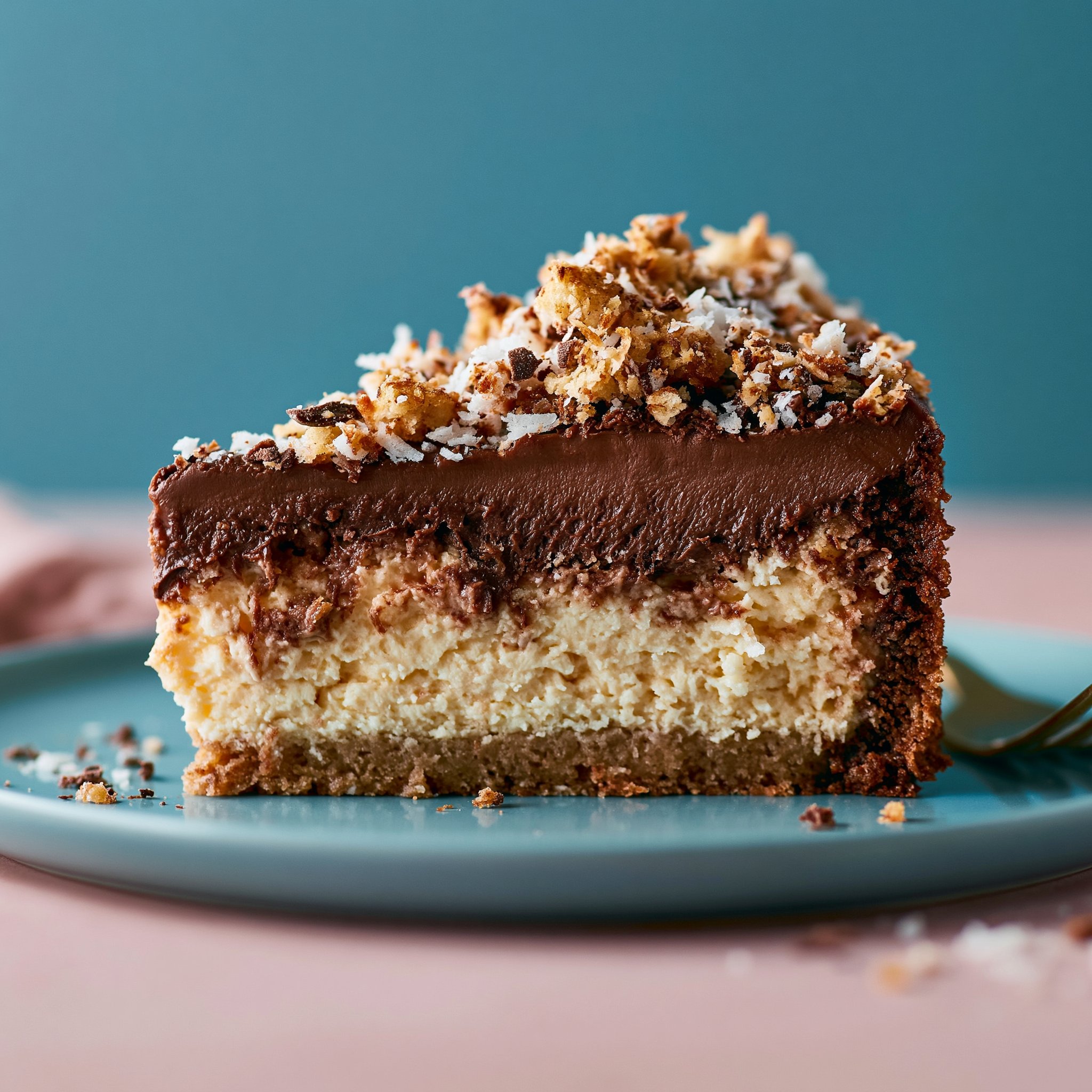
Serve this cheesecake cold for the cleanest slices and the best contrast between the firm, creamy filling and the chewy coconut topping. I love a simple drizzle of melted chocolate right before serving, plus a few whipped cream swirls to lighten each bite. For extra crunch, add toasted coconut flakes and a few whole pecan halves on top so people can see exactly what’s coming.
How to Store It
Keep the cheesecake covered in the refrigerator. It holds beautifully once fully chilled, and the topping actually gets easier to slice cleanly after a night in the fridge. For longer storage, you can freeze chilled slices and thaw in the fridge so the filling stays creamy and the topping doesn’t weep.
Final Thoughts
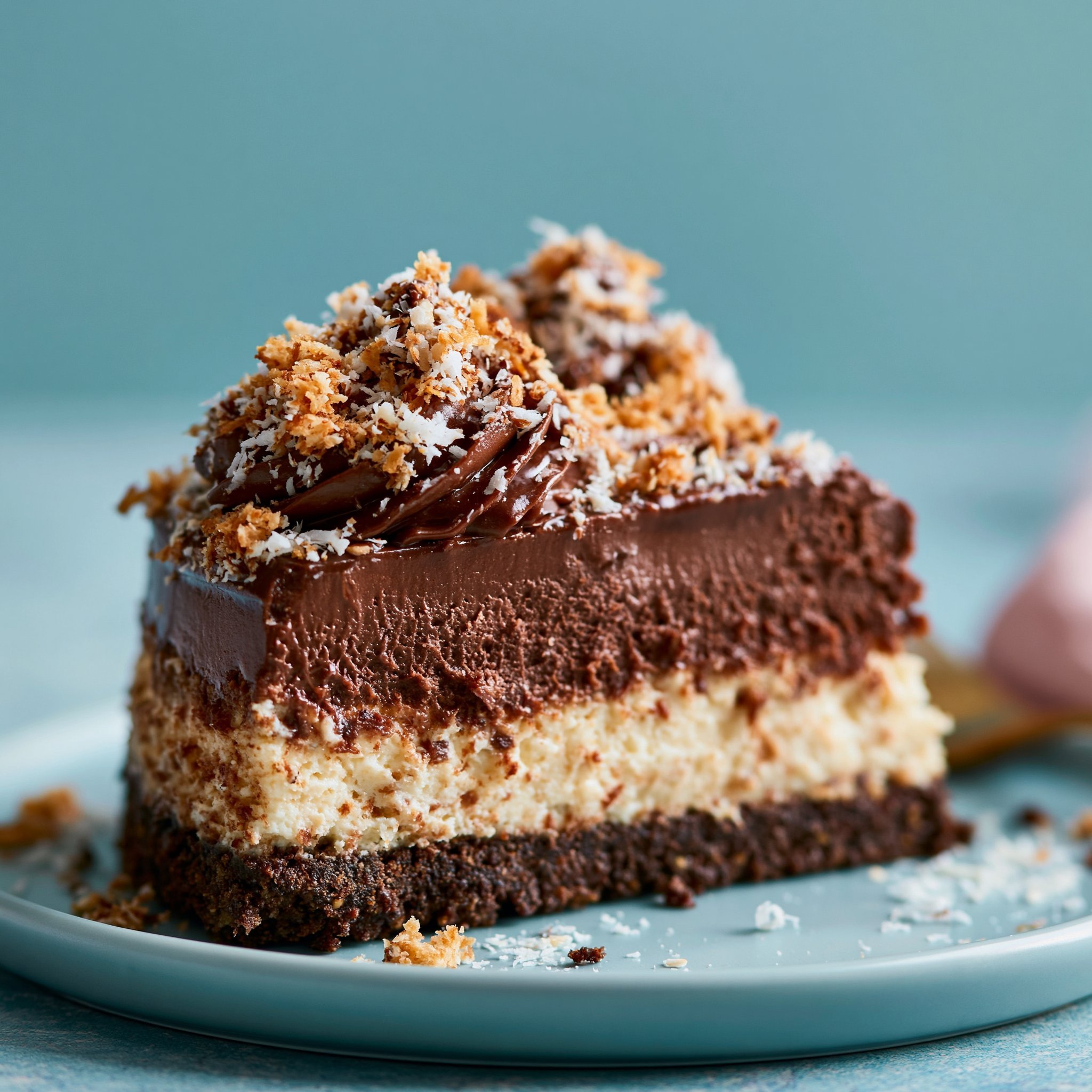
This is the kind of dessert that looks like a bakery project but bakes up in a very doable rhythm: crust, smooth chocolate filling, slow cool, then that glossy coconut-pecan finish. If you take your time with the cooling and chilling, you’ll get a cheesecake that slices cleanly and tastes even better the next day.
Conclusion
If you want to compare how other bakers approach the coconut-pecan topping and chocolate base, check out Life, Love and Sugar’s German Chocolate Cheesecake for another rich take, Homemade In The Kitchen’s German Chocolate Cheesecake for a cozy, from-scratch approach, and The Country Cook’s German Chocolate Cheesecake Cake if you like the idea of cheesecake meets layer cake presentation.